
Have you ever wondered what happens to the wastewater generated in our daily lives? With the U.S. wastewater treatment plants processing an estimated 34 billion gallons of wastewater every day, understanding the wastewater treatment process is crucial.
The journey of wastewater treatment involves three distinct stages: primary, secondary, and tertiary treatment. Each stage plays a vital role in ensuring the water released back into the environment is safe and clean. Understanding the differences between primary vs secondary vs tertiary treatment is essential for effective wastewater management.
Key Takeaways
- Wastewater treatment involves three main stages.
- Understanding the differences between these stages is crucial for effective management.
- The U.S. processes 34 billion gallons of wastewater daily.
- Primary, secondary, and tertiary treatments each have distinct roles.
- Effective wastewater treatment ensures environmental safety.
The Fundamentals of Wastewater Treatment
Wastewater treatment is a multi-stage process designed to remove contaminants from sewage generated by households and industries. This process is crucial for maintaining environmental health and preventing water pollution.
The Purpose and Importance of Treating Wastewater
Treating wastewater is essential to remove harmful pollutants that can contaminate water bodies, posing risks to both human health and the environment. The primary goal is to ensure that the treated water is safe for discharge into rivers, lakes, or oceans, or for reuse in irrigation and other non-potable purposes.
Overview of the Complete Treatment Process
The complete wastewater treatment process typically involves three main stages: primary, secondary, and tertiary treatment. Each stage employs different methods to remove various types of contaminants.
- Primary treatment involves physical processes to remove large objects and settleable solids.
- Secondary treatment uses biological processes to break down organic matter.
- Tertiary treatment applies advanced technologies for further purification.
Common Pollutants and Contaminants in Wastewater
Wastewater contains a variety of pollutants, including suspended solids, organic matter, nutrients like nitrogen and phosphorus, and pathogens. These contaminants can lead to eutrophication, harm aquatic life, and pose health risks to humans if not properly treated.
Understanding these fundamentals is key to appreciating the role of each treatment stage in ensuring effective wastewater management.
What Is the Difference Between Primary, Secondary, and Tertiary Treatment
Wastewater treatment is categorized into three main levels: primary, secondary, and tertiary, each with distinct goals and methods. Understanding these differences is essential for selecting the appropriate treatment level based on water quality needs and application types.
Core Distinctions in Treatment Goals and Methods
Primary treatment focuses on the physical separation of solid waste from the wastewater through processes like sedimentation. Secondary treatment uses biological processes, such as oxidation, to further purify the wastewater. Tertiary treatment involves advanced purification methods to remove specific contaminants like phosphates and nitrates.
The choice of treatment level depends on the intended use of the treated water and the type of contaminants present. For instance, tertiary treatment is often required for water that will be reused or discharged into sensitive ecosystems.
Contaminant Removal Efficiency Comparison
| Treatment Level | Primary Treatment | Secondary Treatment | Tertiary Treatment |
|---|---|---|---|
| Contaminant Removal | Removes suspended solids and organic matter through sedimentation | Removes additional organic matter and nutrients through biological processes | Removes specific contaminants like phosphates, nitrates, and pathogens |
| Efficiency | Moderate efficiency, removing about 50-60% of suspended solids | Higher efficiency, removing about 85-90% of organic matter | High efficiency, capable of removing up to 99% of contaminants |
Treatment Level Selection Based on Water Quality Needs
The selection of a treatment level is influenced by factors such as the intended use of the treated water and the type of application, whether urban, rural, industrial, or municipal.
Urban vs. Rural Applications
Urban areas often require more advanced treatment levels due to higher population densities and stricter environmental regulations. Rural areas, while still needing effective treatment, might opt for simpler, less energy-intensive solutions.
Industrial vs. Municipal Requirements
Industrial wastewater treatment often necessitates specialized processes to remove specific contaminants associated with industrial activities. Municipal wastewater treatment, on the other hand, focuses on treating domestic sewage and may require tertiary treatment for nutrient removal.
By understanding the core distinctions and efficiencies of primary, secondary, and tertiary treatment, wastewater management can be tailored to meet specific water quality needs, ensuring effective and sustainable water resource management.
Primary Treatment: Physical Separation Processes
Primary treatment represents the foundational step in wastewater treatment, focusing on the removal of large objects and suspended solids through physical means. This initial phase is crucial in municipal wastewater treatment, as it sets the stage for subsequent treatment processes.
Screening and Grit Removal Techniques
The first step in primary treatment involves screening to remove large debris, followed by grit removal to eliminate abrasive materials that could damage equipment. As noted by experts, “Effective screening and grit removal are essential for protecting downstream treatment processes and ensuring the overall efficiency of the wastewater treatment plant.”
Sedimentation and Clarification Methods
Sedimentation and clarification are critical components of primary treatment. Sedimentation allows suspended solids to settle to the bottom, while clarification involves the removal of these settled solids. This process significantly reduces the load of suspended solids in the wastewater.
Typical Contaminant Removal Rates and Limitations
Primary treatment can remove a substantial portion of suspended solids, typically ranging from 50% to 70%. However, it has limitations, particularly in removing dissolved contaminants or nutrients. As one wastewater treatment expert puts it, “While primary treatment is effective in removing suspended solids, it is just the first step in achieving comprehensive wastewater treatment.”
Primary Sludge Management
The sludge resulting from primary treatment requires careful management. This includes thickening, stabilization, and eventual disposal or reuse. Effective primary sludge management is vital for minimizing environmental impact and optimizing resource recovery.
In conclusion, primary treatment is a vital component of wastewater treatment levels, providing a crucial first step in the physical separation of contaminants from wastewater. Understanding its processes and limitations is essential for effective municipal wastewater treatment.
Secondary Treatment: Biological Breakdown Mechanisms
Biological breakdown mechanisms are at the heart of secondary treatment, offering an effective means of removing contaminants from wastewater. Secondary treatment is a critical phase in the wastewater treatment process, where biological processes are employed to degrade organic matter and reduce pollutant levels.
Activated Sludge Process Explained
The activated sludge process is a widely used biological treatment method. It involves mixing wastewater with a diverse community of microorganisms that break down organic matter. This process requires aeration to maintain the health and activity of the microorganisms.
Trickling Filters and Rotating Biological Contactors
Trickling filters and rotating biological contactors are other effective biological treatment technologies. Trickling filters involve passing wastewater over a medium, such as rock or plastic, that supports a biofilm of microorganisms. Rotating biological contactors work similarly but involve rotating disks to increase oxygen transfer.
Aerobic vs. Anaerobic Biological Treatment
Biological treatment can be aerobic or anaerobic. Aerobic processes use oxygen and are generally faster and more efficient, while anaerobic processes occur without oxygen and are often used for treating high-strength wastes.
| Process | Oxygen Requirement | Efficiency |
|---|---|---|
| Activated Sludge | Aerobic | High |
| Trickling Filter | Aerobic | Medium to High |
| Anaerobic Digestion | Anaerobic | Low to Medium |
Secondary Clarification and Sludge Handling
After biological treatment, secondary clarification is used to separate the treated wastewater from the biomass. The biomass is then managed as sludge, which may be further treated or disposed of according to regulations.
Secondary treatment is a vital component of the wastewater treatment process, significantly reducing the organic content and pollutant levels in wastewater. By understanding the different biological breakdown mechanisms and technologies available, wastewater treatment plants can be designed and operated more effectively.
Tertiary Treatment: Advanced Purification Methods
Tertiary treatment represents the final stage in the wastewater treatment process, employing advanced purification methods to produce high-quality effluent. This stage is crucial for removing remaining contaminants that were not eliminated during primary and secondary treatment, ensuring the water meets stringent quality standards for discharge or reuse.
Filtration Technologies
Filtration plays a vital role in tertiary treatment, with various technologies available to suit different water quality needs. Sand filtration is a traditional method that effectively removes suspended solids. Membrane filtration, including microfiltration and ultrafiltration, offers higher efficiency in removing finer particles and some microorganisms. Activated carbon filtration is another effective method for removing dissolved organic compounds and improving water taste and odor.
Chemical Treatments and Nutrient Removal
Chemical treatments are employed in tertiary treatment to remove specific contaminants, particularly nutrients like nitrogen and phosphorus that can cause eutrophication in receiving waters. Processes such as chemical precipitation and advanced nutrient removal systems are used to achieve low nutrient levels. These treatments are essential for protecting sensitive ecosystems and maintaining water quality.
Disinfection Methods
Disinfection is a critical step in tertiary treatment, aimed at inactivating pathogenic microorganisms to prevent the spread of waterborne diseases. Common disinfection methods include chlorination, ultraviolet (UV) light irradiation, and ozonation. Each method has its advantages and challenges, with the choice depending on factors like effluent quality, cost, and environmental impact.
Emerging Advanced Oxidation Processes
Advanced Oxidation Processes (AOPs) are emerging as promising technologies for tertiary treatment. AOPs involve the generation of highly reactive species, such as hydroxyl radicals, to degrade persistent organic pollutants. Techniques like ozone/hydrogen peroxide and UV/TiO2 photocatalysis are being researched and implemented to enhance contaminant removal and improve water quality.
The integration of these advanced purification methods in tertiary treatment significantly enhances the overall efficiency of wastewater treatment plants, producing high-quality effluent that can be safely discharged into the environment or reused for various purposes.
Real-World Applications and Case Studies
Real-world wastewater treatment scenarios showcase a range of configurations and treatment levels, each with its own set of challenges and benefits. The effectiveness of a wastewater treatment process depends on various factors, including the type of wastewater, the required level of treatment, and the intended use of the treated water.
Municipal Wastewater Treatment Plant Configurations
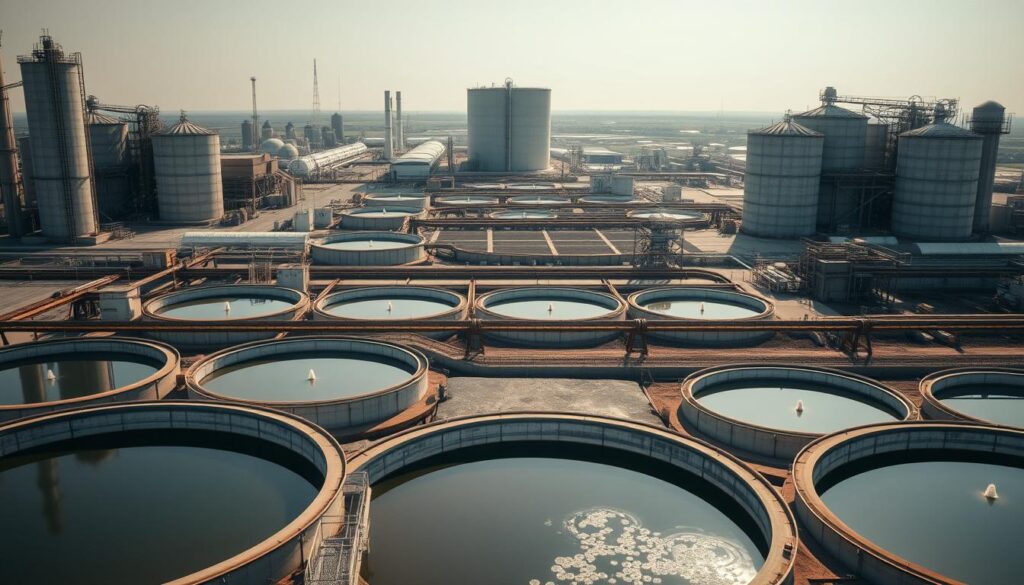
Municipal wastewater treatment plants typically employ a combination of primary, secondary, and tertiary treatment processes. For instance, a typical configuration might include physical separation processes in the primary treatment stage, followed by biological breakdown mechanisms in the secondary stage, and advanced purification methods in the tertiary stage.
Industrial Wastewater Treatment Examples
Industrial wastewater treatment often requires specialized processes tailored to the specific contaminants present in the wastewater. For example, industries that generate wastewater with high levels of toxic chemicals may require advanced oxidation processes or other specialized treatment technologies.
Small Community Systems vs. Large Urban Facilities
The scale of a wastewater treatment facility can significantly impact its design and operation. Small community systems may employ simpler treatment processes and more compact equipment, while large urban facilities often require more complex and sophisticated treatment systems.
Water Reuse Applications by Treatment Level
The level of treatment achieved can significantly impact the potential for water reuse. For example, tertiary-treated water may be suitable for irrigation or other non-potable purposes, while advanced tertiary treatment or additional polishing steps may be required for potable reuse.
Equipment and Infrastructure Requirements
Wastewater treatment requires a range of equipment and infrastructure, from basic primary treatment facilities to advanced tertiary treatment technologies. The specific requirements depend on the level of treatment needed to meet water quality standards.
Primary Treatment Facilities and Equipment
Primary treatment involves physical processes to remove large objects and particulate matter. Equipment includes screens, grit chambers, and sedimentation tanks. These facilities are designed to handle large volumes of wastewater and are typically the first step in the treatment process.
Secondary Treatment Bioreactors and Systems
Secondary treatment utilizes biological processes to break down organic matter. Bioreactors, such as activated sludge systems and trickling filters, are key components. These systems require aeration equipment, clarifiers, and sludge handling facilities.
Tertiary Treatment Technologies and Automation
Tertiary treatment involves advanced technologies to further purify the wastewater. This may include filtration systems, chemical treatment, and disinfection processes. Automation plays a crucial role in monitoring and controlling these complex systems.
Space and Footprint Considerations
The space required for wastewater treatment facilities varies greatly depending on the treatment level and technology used. A comparison of the typical footprint for different treatment levels is shown below:
| Treatment Level | Typical Equipment | Footprint |
|---|---|---|
| Primary | Screens, Grit Chambers, Sedimentation Tanks | Large |
| Secondary | Bioreactors, Aeration Equipment, Clarifiers | Medium to Large |
| Tertiary | Filtration Systems, Chemical Treatment, Disinfection | Small to Medium |
Understanding these requirements is essential for designing and implementing effective wastewater treatment solutions.
Cost and Resource Considerations
Understanding the financial and resource implications of wastewater treatment is crucial for municipalities and industries alike. The cost of treating wastewater varies significantly across different treatment levels, including capital investment, operational expenses, energy requirements, and staffing needs.
Capital Investment Comparison Across Treatment Levels
The initial investment required for wastewater treatment infrastructure can be substantial. Primary treatment typically requires less capital investment compared to secondary and tertiary treatments, which involve more complex technologies and equipment.
| Treatment Level | Capital Investment | Operational Expenses |
|---|---|---|
| Primary | Low to Moderate | Low |
| Secondary | Moderate to High | Moderate |
| Tertiary | High | High |
Operational and Maintenance Expenses
Operational costs, including energy consumption, chemical usage, and maintenance, vary across treatment levels. Secondary and tertiary treatments generally have higher operational expenses due to the complexity of the processes involved.
Energy Requirements and Efficiency Measures
Energy efficiency is a critical factor in wastewater treatment, with significant opportunities for cost savings through the adoption of energy-efficient technologies and practices.
Staffing and Expertise Needs
The level of staffing and expertise required for wastewater treatment operations depends on the treatment level and technology used. More advanced treatment levels require specialized knowledge and training.
By understanding these cost and resource considerations, decision-makers can make informed choices about wastewater treatment strategies that balance economic, environmental, and social factors.
Environmental Benefits and Sustainability Impact
Wastewater treatment processes are vital for improving water quality, safeguarding public health, and promoting sustainable practices. The environmental benefits of these processes are multifaceted, contributing significantly to ecological conservation and community well-being.
Water Quality Improvements in Receiving Bodies
Effective wastewater treatment enhances the quality of water in receiving bodies such as rivers, lakes, and oceans. By removing pollutants and contaminants, treated wastewater reduces the risk of eutrophication and maintains biodiversity. This improvement in water quality supports aquatic life and enhances the aesthetic and recreational value of water bodies.
Public Health Protection Measures
Wastewater treatment is crucial for protecting public health by eliminating pathogens and harmful substances that could otherwise contaminate water sources. Proper treatment and disinfection of wastewater prevent the spread of waterborne diseases, ensuring a safer environment for communities.
Resource Recovery Opportunities (Energy, Nutrients)
Modern wastewater treatment facilities are increasingly focusing on resource recovery, transforming waste into valuable resources such as energy and nutrients. For instance, anaerobic digestion can produce biogas, which can be used as a renewable energy source. Additionally, nutrients like phosphorus and nitrogen can be recovered and used as fertilizers, reducing the need for synthetic fertilizers.
Carbon Footprint Considerations
While wastewater treatment offers numerous environmental benefits, it also has a carbon footprint that needs to be managed. Treatment processes consume energy, which is often generated from non-renewable sources, contributing to greenhouse gas emissions. However, advancements in technology and the adoption of renewable energy sources can help mitigate this impact, making wastewater treatment more sustainable.
| Aspect | Environmental Benefit | Sustainability Impact |
|---|---|---|
| Water Quality | Improves receiving body quality | Supports biodiversity and recreational use |
| Public Health | Protects against waterborne diseases | Ensures community well-being |
| Resource Recovery | Produces energy and nutrients | Reduces reliance on non-renewable resources |
| Carbon Footprint | Managed through renewable energy | Mitigates climate change impacts |
Conclusion
Understanding the differences between primary, secondary, and tertiary wastewater treatment is crucial for effective wastewater management. The wastewater treatment process involves various levels of treatment, each with distinct goals and methods.
Primary treatment focuses on physical separation processes, while secondary treatment involves biological breakdown mechanisms. Tertiary treatment provides advanced purification methods to produce high-quality effluent. The choice of treatment level depends on the specific water quality needs and regulations.
By understanding What Is the Difference Between Primary, Secondary, and Tertiary Treatment, wastewater treatment plants can be designed and operated to meet the required standards, protecting public health and the environment.