
How do we measure the temperature of our oceans, lakes, and rivers with precision? The answer lies in water temperature sensors, crucial devices used across various industries, including aquaculture, HVAC systems, and environmental monitoring.
Temperature sensing devices play a vital role in providing essential data for environmental analysis, resource management, and industrial operations. Understanding the basics of these liquid temperature detectors is essential for making informed decisions about their application.
Key Takeaways
- Water temperature sensors are used in various industries, including aquaculture and environmental monitoring.
- Temperature sensing devices provide crucial data for environmental analysis and resource management.
- Liquid temperature detectors are essential for industrial operations and informed decision-making.
Understanding Water Temperature Measurement
Accurate water temperature monitoring is essential for numerous processes, ranging from industrial operations to environmental conservation. Water temperature affects various aspects, including chemical reactions, biological processes, and equipment performance.
Why Accurate Water Temperature Monitoring Matters
Accurate water temperature monitoring is crucial because it directly impacts the efficiency, safety, and quality of various applications. For instance, in aquaculture, maintaining the right water temperature is vital for the health and growth of aquatic life. In industrial processes, precise temperature control can affect the outcome of chemical reactions and the longevity of equipment.
The Science Behind Temperature Sensing in Liquids
Temperature sensing devices work by detecting changes in temperature and converting them into electrical signals. These devices typically consist of two metals that generate a voltage or resistance when exposed to temperature changes. The science behind temperature sensing in liquids involves understanding how different materials respond to temperature variations, allowing for accurate measurement and control.
The use of liquid temperature detectors and various types of temperature probes enables precise monitoring of water temperature. By selecting the appropriate temperature sensing technology, users can ensure reliable and accurate measurements in diverse applications.
Basic Types of Water Temperature Measuring Sensors
Different applications require different types of water temperature measuring sensors, each with its unique characteristics. The choice of sensor depends on several factors, including the measurement environment, required accuracy, and the level of complexity tolerated by the application.
Overview of Sensor Categories
Water temperature sensors can be broadly categorized into several types, including Thermistors, Resistance Temperature Detectors (RTDs), Thermocouples, and Semiconductor Sensors. Each category has its strengths and is suited to specific applications.
- Thermistors are highly sensitive and often used in applications requiring precise temperature control.
- RTDs offer high accuracy and stability, making them ideal for industrial applications.
- Thermocouples are versatile and can measure a wide range of temperatures, making them suitable for various industrial processes.
- Semiconductor Sensors are compact and can be integrated into complex systems, providing digital outputs.
Contact vs. Non-Contact Measurement Methods
Water temperature can be measured using either contact or non-contact methods. Contact methods involve direct immersion of the sensor in water, providing accurate readings. Non-contact methods, such as infrared sensing, measure temperature from the surface without direct contact.
Analog vs. Digital Output Considerations
The choice between analog and digital output sensors depends on the application’s requirements. Analog sensors provide a continuous signal proportional to the temperature, while digital sensors offer discrete output, often with built-in processing capabilities.
- Analog outputs are useful in applications where the signal needs to be processed further or where simplicity is key.
- Digital outputs are advantageous in modern systems that rely on digital communication and processing, offering easier integration and higher precision.
Understanding these categories and their characteristics is essential for selecting the right water temperature measuring sensor for a specific application.
Thermocouples: The Versatile Temperature Detectors
Among various temperature sensors, thermocouples stand out due to their broad application range. Thermocouples are one of the most common temperature sensors used across different industries due to their reliability, accuracy, sensitivity, simplicity, and wide temperature operating range.
How Thermocouples Generate Voltage
Thermocouples work on the principle of the Seebeck effect, where a voltage is generated between two dissimilar metals when there is a temperature difference between them. This voltage is directly proportional to the temperature difference, allowing for accurate temperature measurement.
Types of Thermocouples for Water Applications (J, K, T Types)
For water temperature measurement, several types of thermocouples are commonly used, including J, K, and T types. Each type has its specific characteristics and temperature range. Type J thermocouples are suitable for temperatures up to 760°C, Type K for up to 1260°C, and Type T for up to 371°C.
| Thermocouple Type | Temperature Range | Common Applications |
|---|---|---|
| J | 0°C to 760°C | General purpose, high temperature |
| K | -200°C to 1260°C | High temperature, oxidizing atmospheres |
| T | -200°C to 371°C | Cryogenics, low temperature applications |
Advantages and Limitations in Liquid Environments
Thermocouples offer several advantages in liquid environments, including fast response times and the ability to measure high temperatures. However, they also have limitations such as potential corrosion issues and the need for calibration. Proper selection and maintenance can mitigate these limitations.
In conclusion, thermocouples are versatile and widely used for water temperature measurement due to their accuracy and range. Understanding their types and limitations is crucial for effective application.
Resistance Temperature Detectors (RTDs)
Among various temperature sensing technologies, RTDs stand out for their precision. They measure temperature by detecting changes in electrical resistance, typically using platinum as the sensing element.
Working Principles of RTDs
RTDs operate on the principle that the electrical resistance of a metal changes predictably with temperature. This change is directly proportional to the temperature change, making RTDs highly accurate and stable.
Platinum, Copper, and Nickel RTD Variations
Different materials are used in RTD construction, each with its advantages:
- Platinum RTDs are the most common due to their high accuracy and stability over a wide temperature range.
- Copper RTDs offer a more affordable option but with a narrower temperature range.
- Nickel RTDs provide a higher resistance change per degree, enhancing sensitivity.
2-Wire, 3-Wire, and 4-Wire Configurations
RTDs can be configured in different ways to suit various applications:
| Configuration | Description | Advantages |
|---|---|---|
| 2-Wire | Simple configuration with two wires connected to the RTD. | Easy to install, cost-effective. |
| 3-Wire | Compensates for lead resistance, improving accuracy. | Balances cost and accuracy. |
| 4-Wire | Provides the highest accuracy by completely eliminating lead resistance effects. | High precision, ideal for critical applications. |
Accuracy and Response Time Considerations
When selecting an RTD, it’s crucial to consider both accuracy and response time. While platinum RTDs offer high accuracy, their response time can be slower compared to other technologies. The choice of configuration also impacts these factors, with 4-wire configurations offering the highest accuracy.
Thermistors: Highly Sensitive Temperature Sensors
Thermistors, or thermally sensitive resistors, play a crucial role in detecting even slight changes in temperature. Their high sensitivity makes them invaluable in applications where precise temperature measurement is critical.
NTC and PTC Thermistors Explained
Thermistors are primarily categorized into two types based on their response to temperature changes: Negative Temperature Coefficient (NTC) and Positive Temperature Coefficient (PTC) thermistors. NTC thermistors decrease their resistance as the temperature increases, making them suitable for applications requiring precise temperature measurement. On the other hand, PTC thermistors increase their resistance with rising temperatures, often used in protective circuits to prevent overheating.
The distinction between NTC and PTC thermistors is crucial for selecting the appropriate type for specific applications. For instance, NTC thermistors are commonly used in temperature sensing and control systems, while PTC thermistors are used in self-regulating heating elements and overcurrent protection devices.
Applications in Precise Water Temperature Monitoring
In the context of water temperature monitoring, thermistors offer high accuracy and rapid response times. Their ability to detect slight temperature changes makes them ideal for applications such as:
- Aquarium temperature control
- Water heater temperature regulation
- Laboratory water baths
- Industrial process control systems
As noted by experts, “Thermistors are highly effective in applications requiring precise temperature control, such as in medical devices and industrial processes.”
“The use of thermistors in temperature measurement has revolutionized the way we monitor and control temperature in various industries.”
Sensitivity, Range, and Linearity Considerations
When selecting thermistors for temperature measurement, several factors need to be considered, including sensitivity, operating range, and linearity. The table below summarizes key considerations for NTC and PTC thermistors:
| Characteristics | NTC Thermistors | PTC Thermistors |
|---|---|---|
| Sensitivity | High sensitivity to temperature changes | Less sensitive compared to NTC |
| Operating Range | Wide range, typically -50°C to +150°C | Variable, often used near their Curie temperature |
| Linearity | Non-linear resistance-temperature relationship | Non-linear, with a sharp increase at the Curie temperature |
In conclusion, thermistors are highly versatile and sensitive temperature sensors suitable for a wide range of applications, including precise water temperature monitoring. Understanding the differences between NTC and PTC thermistors, as well as their characteristics, is crucial for selecting the right thermistor for specific needs.
Semiconductor Temperature Sensors
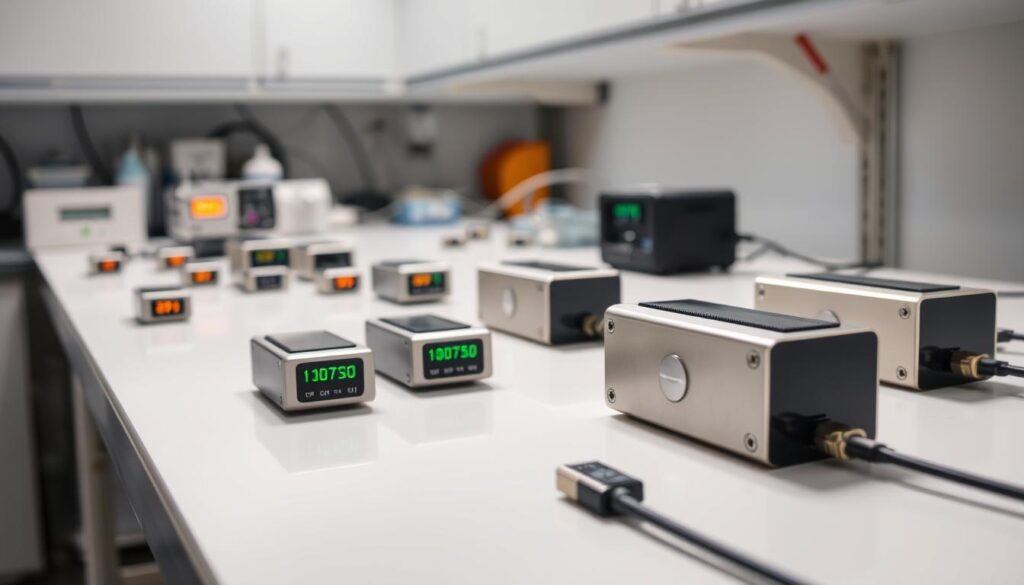
Semiconductor temperature sensors are becoming increasingly popular due to their linear output and compact design. These sensors utilize the properties of semiconductor materials to measure temperature, offering a reliable and efficient solution for various applications.
Digital vs. Analog Semiconductor Sensors
Semiconductor temperature sensors are available in both digital and analog formats. Digital sensors provide a direct digital output, making them easy to integrate with microcontrollers and other digital systems. Analog sensors, on the other hand, offer a continuous voltage or current output that corresponds to the temperature.
Integrated Circuit Temperature Sensors
Integrated circuit (IC) temperature sensors are a type of semiconductor sensor that integrates the sensing element and signal processing circuitry on a single chip. This design enhances accuracy, reduces power consumption, and simplifies system design.
Waterproof Packaging Options
For applications involving liquid temperature detection, waterproof packaging is crucial. Many semiconductor temperature sensors are available in waterproof packages, such as TO-92 or SOIC, which are designed to withstand harsh environments. These packaging options ensure the reliability and longevity of the sensor in wet conditions.
By choosing the right semiconductor temperature sensor, users can benefit from accurate and reliable temperature measurement in a wide range of applications, from industrial processes to consumer electronics.
Infrared and Optical Temperature Sensors
Measuring water temperature without direct contact is made possible through the use of infrared and optical temperature sensors. These sensors are particularly useful for surface water temperature monitoring.
Non-Contact Measurement Principles
Infrared and optical temperature sensors operate on the principle of detecting the radiation emitted by objects. This non-contact method allows for temperature measurement without disturbing the water or its surroundings.
The technology behind these sensors involves detecting infrared radiation, which is emitted by all objects. The intensity of this radiation is correlated with the object’s temperature, enabling accurate temperature measurement.
Applications in Surface Water Temperature Monitoring
These sensors are particularly useful for monitoring surface water temperatures in lakes, rivers, and reservoirs. They can be deployed on satellites, aircraft, or fixed monitoring stations to collect data over large areas or specific points of interest.
Limitations in Water Environments
While infrared and optical sensors offer many advantages, they also have limitations. For instance, their accuracy can be affected by factors such as water surface roughness, atmospheric conditions, and the presence of vegetation or contaminants.
Understanding these limitations is crucial for the effective application of infrared and optical temperature sensors in water environments. By acknowledging and addressing these challenges, users can optimize their use of these technologies for accurate water temperature monitoring.
Practical Applications Across Industries
Accurate water temperature measurement is essential in diverse fields, including aquaculture, food processing, and scientific research. Water temperature sensors are critical in ensuring optimal conditions for various industrial and environmental applications.
Aquaculture and Fish Farming
In aquaculture, water temperature sensors are used to monitor and maintain optimal water temperatures for fish and other aquatic species. This ensures healthy growth and reduces mortality rates. Resistance Temperature Detectors (RTDs) are often used in these applications due to their high accuracy and stability.
HVAC and Building Management Systems
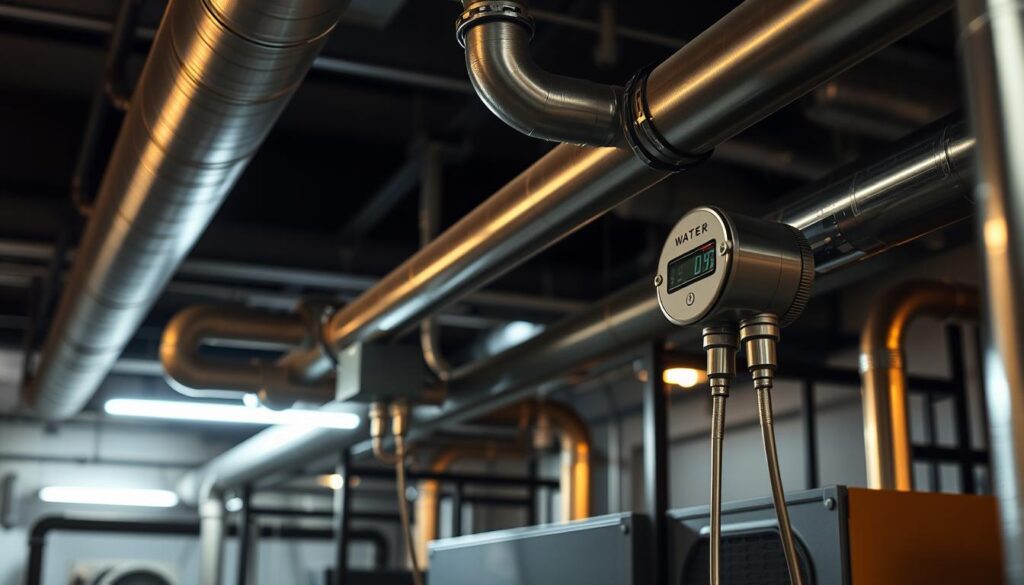
Water temperature sensors play a crucial role in Heating, Ventilation, and Air Conditioning (HVAC) systems. They help in monitoring the temperature of water used in heating and cooling systems, ensuring efficient operation and energy savings. Thermistor temperature sensors are commonly used in HVAC systems due to their high sensitivity and fast response times.
Food and Beverage Processing
In the food and beverage industry, precise temperature control is vital for ensuring product quality and safety. Water temperature sensors are used in various processes, including pasteurization and sterilization. The use of digital temperature sensors provides accurate and real-time temperature monitoring.
Scientific Research and Environmental Monitoring
Water temperature sensors are also essential in scientific research and environmental monitoring. They are used to study water bodies, monitor climate change, and track environmental conditions. The accuracy and reliability of these sensors are crucial for obtaining valid data.
Selecting the Right Water Temperature Sensor
Choosing the appropriate water temperature sensor is crucial for accurate and reliable temperature measurement in various applications. The selection process involves considering several key factors to ensure optimal performance.
Temperature Range Requirements
The first step in selecting a water temperature sensor is to determine the required temperature range. Different sensors have varying temperature ranges, and choosing one that matches your application’s needs is essential. For instance, thermocouples are suitable for high-temperature applications, while thermistors are often used for more precise measurements at lower temperatures.
Accuracy and Resolution Needs
Accuracy and resolution are critical factors in temperature measurement. The level of precision required depends on the application. For example, in scientific research, high accuracy is paramount, whereas in some industrial processes, a broader tolerance may be acceptable. Understanding the difference between accuracy (how close a measurement is to the actual value) and resolution (the smallest change that can be detected) is vital.
“The accuracy of temperature measurement is not just about the sensor itself but also about the entire measurement system, including calibration and signal processing.” –
Environmental Considerations
Environmental conditions play a significant role in sensor selection. Factors such as corrosion resistance and pressure tolerance must be considered to ensure the sensor’s longevity and reliability.
Corrosion Resistance
For applications involving corrosive substances, selecting a sensor with appropriate corrosion resistance is crucial. Materials like stainless steel or titanium are often used for their durability.
Pressure Tolerance
The sensor must also be able to withstand the pressure conditions of the application. High-pressure environments require sensors that are specifically designed to handle such conditions without compromising accuracy or integrity.
| Sensor Type | Temperature Range (°C) | Accuracy | Corrosion Resistance |
|---|---|---|---|
| Thermocouple | -200 to 2500 | ±1-2°C | High |
| RTD | -200 to 850 | ±0.1-1°C | Medium |
| Thermistor | -50 to 150 | ±0.1-1°C | Low-Medium |
Cost vs. Performance Analysis
Finally, the cost of the sensor must be weighed against its performance. While high-precision sensors offer greater accuracy, they may come at a significantly higher cost. A thorough cost-benefit analysis is necessary to determine the most appropriate sensor for the specific application.
By carefully considering these factors, users can select a water temperature sensor that meets their specific needs, ensuring reliable and accurate temperature measurement.
Conclusion: Making Informed Decisions About Water Temperature Sensors
Selecting the right water temperature sensor is crucial for various applications, from aquaculture to HVAC systems. Understanding the different types of sensors, including thermocouples, RTDs, thermistors, and semiconductor temperature sensors, is essential for making an informed decision.
Water temperature sensors play a vital role in ensuring accurate temperature monitoring, which is critical in many industries. By considering factors such as temperature range, accuracy, and environmental conditions, users can choose the most suitable temperature sensing devices for their specific needs.
By leveraging the knowledge gained from this article, readers can confidently navigate the market for water temperature sensors and make informed decisions that meet their application requirements. Whether it’s for industrial processes or scientific research, the right water temperature sensor can significantly impact performance and efficiency.